
McDry Dry Cabinets for SMT & MSD Storage
Find the right McDry dry cabinet for the controlled storage of moisture-sensitive devices (MSDs), SMD reels, IC packages, PCBs and other moisture-sensitive electronic components used in SMT production.
Which McDry Dry Cabinet Is Right for Your SMT Production?
DXU, MC and MCU differ mainly in storage capacity, cabinet footprint and typical access frequency. The following overview provides a quick guide for initial model selection.
| Selection Criteria | DXU | MC | MCU |
|---|---|---|---|
| Typical application | Active SMT production and larger MSD inventories | Central dry storage of larger component inventories | Compact SMT work areas and smaller storage volumes |
| Typical stored items | SMD reels, IC packages, PCBs and trays | Larger inventories of MSDs, PCBs and assemblies | Smaller quantities of SMD reels, IC packages and MSDs |
| Capacity | Approx. 600–1,200 L | Approx. 1,200 L | Approx. 135–400 L |
| Access frequency | Frequent | Moderate | Depends on workstation and storage requirements |
| Footprint | Medium to large | Large | Compact |
| Particularly suitable for | SMT lines with regular component access | Large inventories with moderate access frequency | Smaller production areas with limited space |
Final model selection depends on storage volume, component type, access frequency, available floor space and the specific requirements of your SMT production.

Dry cabinets DXU series
For frequent access in SMT production
The DXU Series is designed for ultra-low-humidity storage of moisture-sensitive devices (MSDs) in production environments. It maintains 1% RH and is particularly suitable for IC packages, SMD reels and other electronic components that are accessed frequently during production.
Dry cabinets MC series
For long-term dry storage of electronic components
The MC Series provides 1% RH for reliable long-term storage of IC packages, electronic components and PCBs. It is particularly suitable for applications where components are stored dry for extended periods and the cabinet doors are opened less frequently.

Dry cabinets MCU series
Compact 1% RH storage for electronics and long-term storage
The MCU Series combines compact dimensions with ultra-low-humidity storage at 1% RH. It is suitable for smaller quantities of MSDs, IC packages, PCBs and other moisture-sensitive electronic components, as well as for long-term storage applications with less frequent access.
Our dry cabinets in use
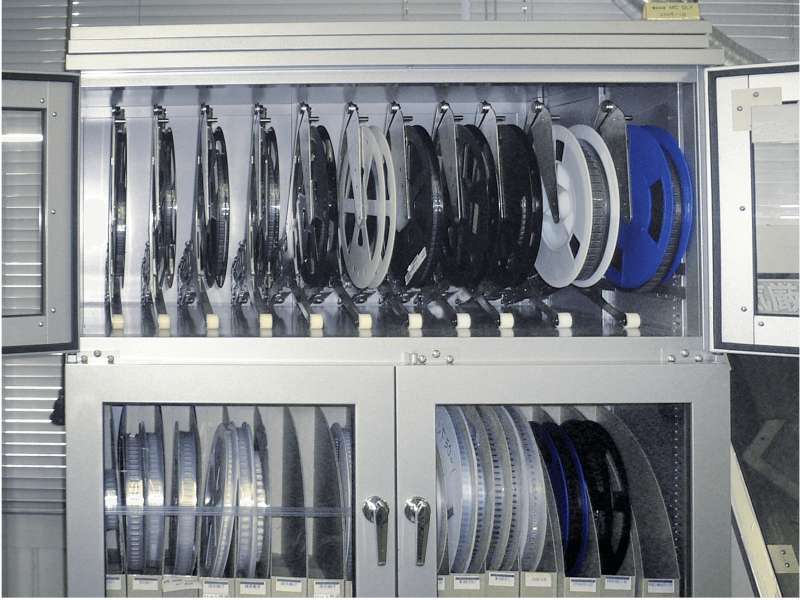


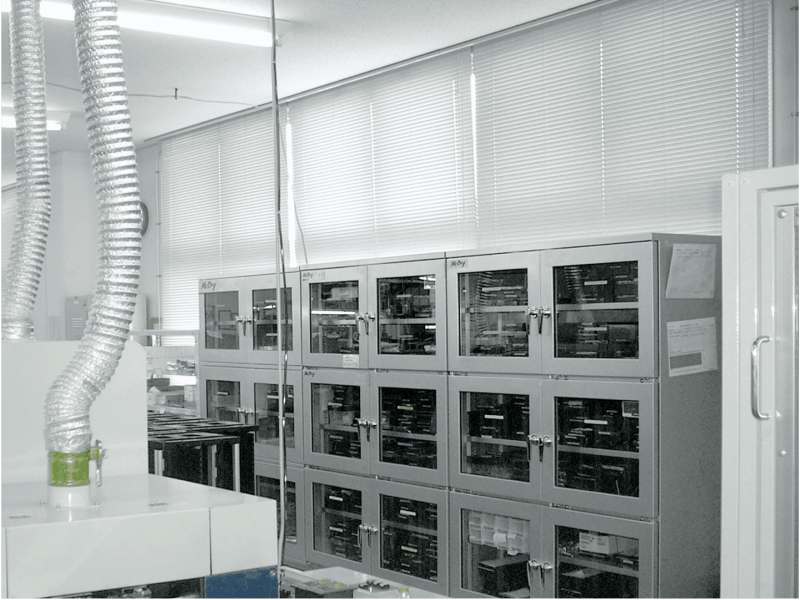


Would you like more information about our dry cabinets?
Reply within 24h • Free quote • Technical support
Frequently Asked Questions About McDry Dry Cabinets
Answers to common questions about selecting, operating and maintaining McDry dry cabinets for MSDs, SMD reels, IC packages, PCBs and other moisture-sensitive electronic components used in SMT production.
What are McDry dry cabinets used for in SMT production?
McDry is used for the controlled dry storage of moisture-sensitive devices (MSDs), SMD reels, IC packages, PCBs, sensors and other electronic components.
A consistently dry storage environment helps limit additional moisture absorption during storage and production and supports MSD and floor-life management.
What is the main strength of McDry?
McDry focuses on one core function: long-term, stable dry storage at very low humidity.
Rather than adding numerous secondary functions, McDry is designed around reliable drying performance for moisture-sensitive electronic components and materials.
Can McDry achieve humidity levels around 1% RH?
McDry is designed for storage at extremely low humidity. Depending on the model and operating conditions, very low humidity levels in the range of approximately 1% RH are possible.
For applications with particularly low target humidity levels, we recommend confirming the required humidity level and operating conditions with Seika Sangyo GmbH before selecting the model.
Why is very low humidity important for MSDs?
Moisture-sensitive devices can absorb moisture from the surrounding environment during storage and handling.
During the subsequent reflow process, absorbed moisture can increase the risk of moisture-related damage such as popcorning and micro-cracking. Controlled dry storage helps limit further moisture absorption.
Does McDry require nitrogen for dry storage?
No continuous nitrogen supply is required for standard dry storage. McDry uses a zeolite-based drying unit that adsorbs moisture and automatically regenerates the desiccant.
This avoids continuous N₂ consumption when humidity control is the primary requirement. If an inert or low-oxygen atmosphere is also required, this must be considered separately.
How does the McDry zeolite drying unit work?
The drying unit removes moisture using a zeolite adsorption system.
Absorbed moisture is released from the system during automatic regeneration cycles using heat. This allows drying performance to be maintained over long periods without routinely replacing the desiccant during normal operation.
Do all McDry dry cabinets use a zeolite drying unit?
McDry uses one or more zeolite-based drying units depending on the model and cabinet size.
The exact configuration depends on the McDry series and required storage capacity.
Why is the removable McDry humidity meter useful?
The McDry humidity meter can be removed separately from the cabinet. This allows calibration or replacement without moving or sending the complete dry cabinet for service.
This simplifies regular calibration and can reduce service effort compared with more integrated measurement systems.
How often should the humidity meter be calibrated?
Regular calibration is important to verify the reliability of the displayed humidity value.
For McDry, annual calibration of the humidity meter is recommended. Seika Sangyo GmbH supports McDry customers in Europe with the organization of humidity meter calibration.
How much routine maintenance does McDry require?
McDry is designed for low routine maintenance. The zeolite drying system regenerates automatically, and no continuous nitrogen supply is required for standard dry storage.
Typical routine checks include the humidity meter, its battery, door seals, power supply and general cabinet operating conditions.
What warranty is provided for McDry dry cabinets?
McDry dry cabinets supplied by Seika Sangyo GmbH are generally covered by a two-year product warranty from the SSG shipment date.
Specific warranty conditions can be confirmed depending on the individual delivery and project.
Are McDry dry cabinets made in Japan?
McDry dry cabinets are manufactured by ERC Co., Ltd. in Japan.
The product concept focuses on robust, long-term dry storage, service-friendly components and stable drying performance.
What is the difference between the DXU, MC and MCU Series?
The DXU Series is designed for larger storage volumes and production environments where components are accessed frequently.
The MC Series is suited to high-capacity dry storage with moderate access frequency, while the MCU Series provides compact models for smaller storage volumes and limited installation space.
Which McDry dry cabinet is suitable for my SMT production?
Model selection depends on the quantity and type of SMD reels, IC packages, PCBs and trays being stored, as well as access frequency, available floor space and required storage capacity.
For frequent access and larger inventories, the DXU Series can be suitable, while MC and MCU cover different storage capacities and installation-space requirements.
Is McDry suitable for long-term storage of electronic components?
Yes. One of the core applications of McDry is the long-term dry storage of moisture-sensitive electronic components.
Where stable, very low humidity must be maintained over extended periods, McDry is designed to provide reliable long-term drying performance.
Which dry cabinet is suitable for long-term storage at 1% RH?
For the long-term storage of moisture-sensitive electronic components at very low humidity, McDry dry cabinets with 1% RH capability are suitable.
In particular, the MC and MCU Series are suited to applications where IC packages, SMD components, PCBs and other moisture-sensitive electronic components are stored dry for extended periods and the cabinet doors are opened comparatively infrequently.
Which dry cabinet is suitable for long-term storage of electronic components?
For long-term storage of moisture-sensitive electronic components, a dry cabinet should not only reach a low humidity value temporarily, but should also provide a stable ultra-low-humidity environment over extended periods.
McDry is designed for this type of dry storage. The MC and MCU Series provide storage conditions down to 1% RH and are particularly suited to long-term storage of IC packages, SMD components, PCBs and other moisture-sensitive electronic components.
Which dry cabinet is suitable for MSDs and IC packages?
McDry dry cabinets are designed for controlled dry storage of moisture-sensitive devices (MSDs), IC packages, SMD reels, PCBs and other moisture-sensitive electronic components.
For production environments with frequent door opening, the DXU Series is particularly suitable. For long-term storage with lower access frequency, the MC and MCU Series are especially suitable.
What is more important than the minimum humidity value in a 1% RH dry cabinet?
The lowest specified humidity value alone does not fully describe the practical drying performance of a dry cabinet. For industrial use, humidity stability, recovery after door opening and access frequency are also important.
A dry cabinet should therefore be selected according to actual storage conditions. For frequent access, McDry offers the DXU Series, while MC and MCU are particularly suited to less frequent access and long-term dry storage.
Which McDry dry cabinet is suitable for frequent door opening?
For SMT and production environments where SMD reels, IC packages or other electronic components are accessed regularly, the McDry DXU Series is designed for frequent access.
When doors are opened frequently, the minimum achievable humidity value is not the only important factor. It is also important how effectively the dry cabinet returns toward the required low-humidity condition after humid ambient air enters the cabinet.
Does the desiccant in a 1% RH dry cabinet need to be replaced regularly?
With McDry, routine replacement of the zeolite desiccant is not required during normal operation.
The zeolite adsorption system absorbs moisture and regenerates automatically. This allows McDry to operate over the long term without the desiccant being treated as a regularly replaced consumable item.
Which McDry Is Right for Your SMT Production?
Tell us your storage volume, component type, access frequency and available installation space. We can help you select the appropriate DXU, MC or MCU configuration.



